
Home Office With Plants: Small Space Ideas That Feel Calm, Green, and Productive
Because a tiny desk corner deserves real design, not an afterthought.
If your "home office" is really a corner of the bedroom, a converted closet, or a slice of the living room, you already know the challenge: how do you make it feel like a real workspace — not just a desk shoved into leftover space? The answer is greenery, smart layout, and a few intentional styling choices. Below you'll find practical, budget-aware ideas for bringing plants into a small home office so it feels calmer, more focused, and genuinely inviting, without eating up the square footage you don't have.
Quick Design Snapshot

A small desk nook layered with plants at different heights feels intentional, not cramped.
Why Plants Work So Well in a Small Home Office
Plants solve a problem that furniture alone can't: they add life and softness to a space without taking up much floor area. In a small office, that matters. A single trailing plant on a shelf, or a compact snake plant tucked into a corner, does more visual work than another storage bin ever could. Greenery also breaks up hard lines — desks, monitors, filing boxes — with organic shapes, which is part of why "biophilic" workspaces consistently feel calmer to work in. And practically speaking, plants are one of the few decor elements that scale down easily: a large room might call for a floor plant, but a tiny office can get the same effect from something the size of a coffee mug.
15 Home Office Plant Ideas for Small Spaces
Go Vertical With a Wall-Mounted Shelf
When desk surface is limited, the wall becomes your best real estate. A single floating shelf above eye level can hold two or three small pots without ever touching your workspace.
How to style it: Mix pot heights and one trailing variety, like a pothos, so a vine can spill down the wall behind your screen.
Choose a Low-Light Desk Plant First
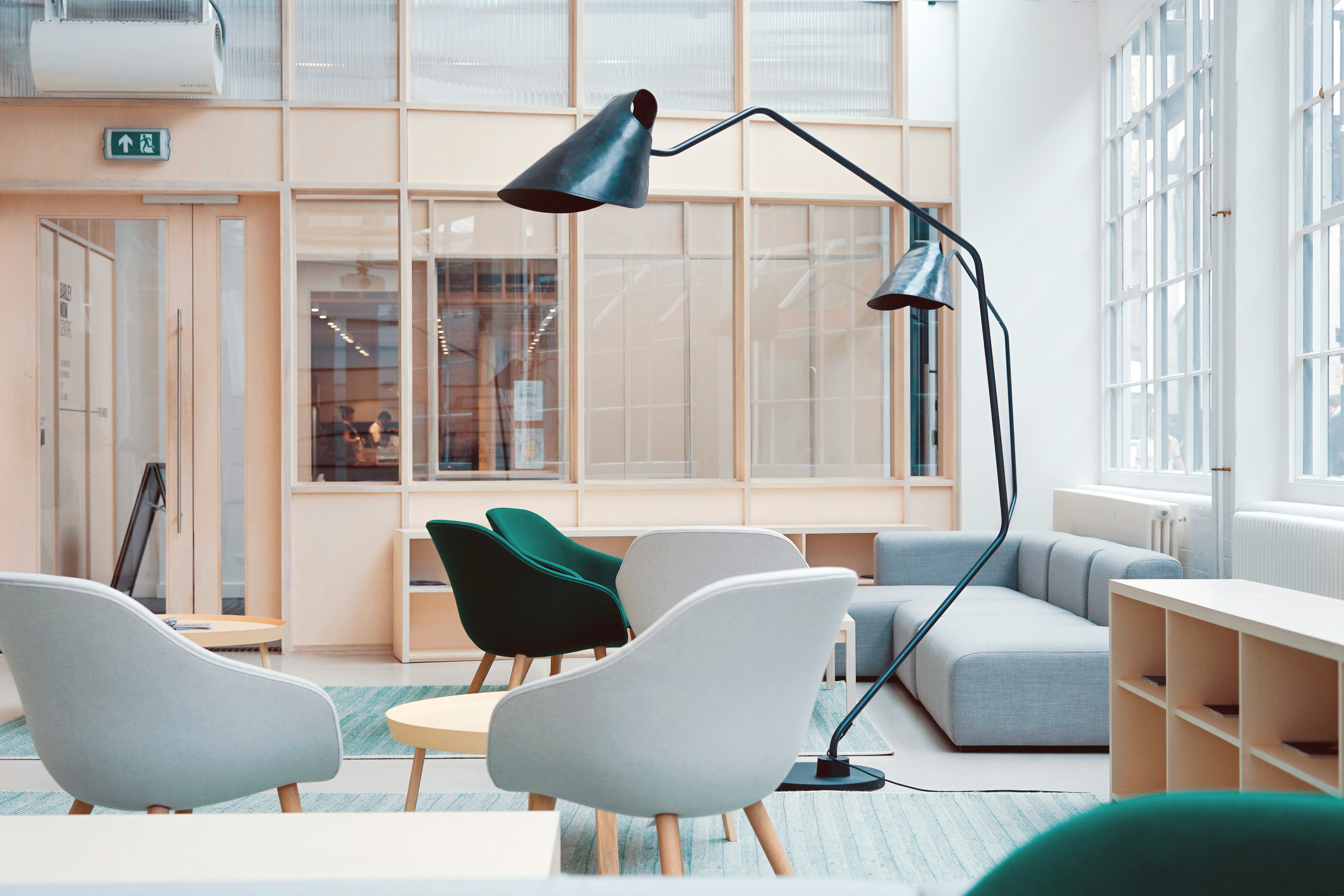
Most small offices — closets, corners, north-facing rooms — don't get strong direct sun. Start with a plant that's genuinely built for that, rather than fighting the light you have.
How to style it: A pothos, ZZ plant, or snake plant in a simple ceramic pot on the desk corner reads as intentional, not cluttered.
Use a Corner Plant Stand Instead of Floor Space
A slim, tiered plant stand tucked into an unused corner adds height and greenery without competing with your desk footprint.
How to style it: Stagger 2–3 plants of different heights, tallest at the back.
Hang a Trailing Plant From the Ceiling
A macramé hanger or simple ceiling hook near a window frees up every inch of surface space while still bringing in greenery at eye level.
How to style it: Position it just outside your direct sightline to the screen so it frames the space rather than distracting you.

Let One Plant Be the Focal Point
In a small room, one well-chosen larger plant — like a compact fiddle leaf fig or a dracaena in a floor pot — often looks more polished than five small ones scattered around.
How to style it: Place it in the corner diagonally opposite your desk so it's visible without being in your workflow.
Add a Mini Plant to Your Monitor Stand Shelf
If your monitor sits on a small riser or stand with shelf space beneath, that underused ledge is perfect for a tiny succulent or air plant.
How to style it: Keep it small — a 2–3 inch pot — so it doesn't visually compete with your screen.
Use Plants to Soften a Room Divider
If your office is a curtained-off corner or a bookshelf-divided nook, a plant or two along the divider line blurs the boundary in a good way.
How to style it: Place a medium plant at the end of an open shelving divider, at a height that doesn't block sightlines.
Group Small Pots on a Windowsill
If your desk sits near a window, the sill itself is prime, free real estate for a small plant grouping.
How to style it: Group 3 odd-numbered pots in varying heights rather than lining them up evenly.
Choose Pots That Match Your Desk Materials
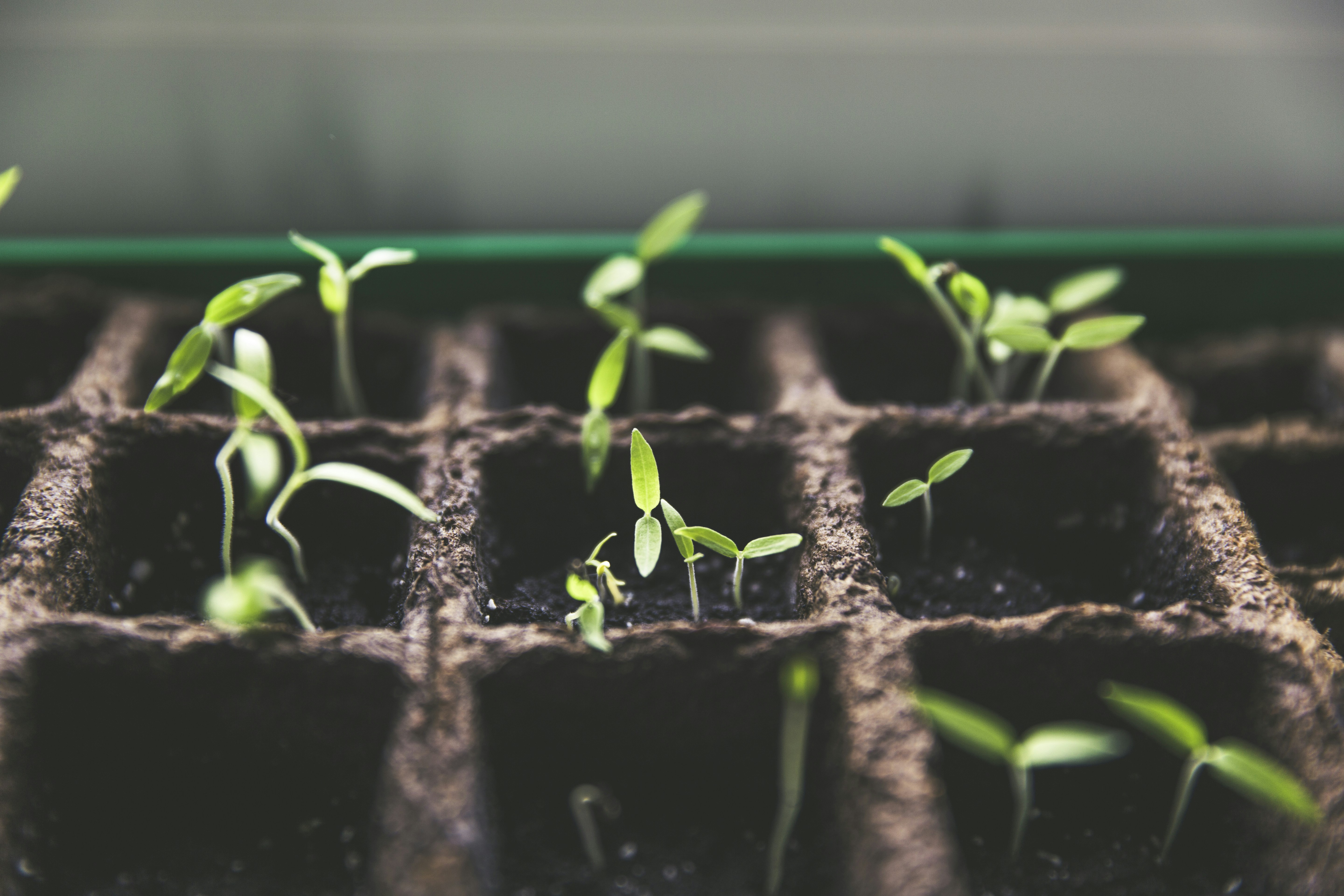
A plant pot in the same material family as your desk — wood, matte ceramic, woven rattan — makes the greenery feel like part of the design rather than an accessory tacked on.
How to style it: If your desk is warm wood, choose terracotta or unglazed ceramic pots rather than glossy white ones.
Use a Plant to Anchor an Awkward Empty Corner
Small offices often have one leftover corner that's too small for furniture but too big to ignore. A single floor plant fills it perfectly.
How to style it: Choose a plant scaled to the corner — not so tall it hits the ceiling, not so small it disappears.
Bring Greenery Into a Closet Office
If your workspace is a converted closet ("cloffice"), a single trailing plant on the top shelf or a small pot on the desk keeps it from feeling like storage.
How to style it: Use an LED grow-light-friendly plant like a pothos if the closet has no window.
Use a Faux Plant Where Light Is Truly Impossible
Not every small office has any usable light — some interior nooks get none at all. A well-made faux plant still delivers the visual softness real ones offer.
How to style it: Choose a matte-leaf variety over a glossy plastic one — it reads far more realistic.
Use a Plant as a Visual Break Between Work and Rest
If your office shares a room with your bed or living space, a plant placed at the "boundary" line helps your brain register a shift from work mode to rest mode.
How to style it: Place a medium plant at the foot of the desk area, facing outward toward the rest of the room.
Add a Trailing Plant to a Bookshelf
If your small office includes a bookshelf, the top shelf is ideal for a trailing plant that can spill down along the spines of books below.
How to style it: Place it toward one end of the shelf rather than dead center, and let vines trail along one side.
Use Plants to Camouflage Cords and Cables
A plant placed strategically at the base of your desk can visually hide the cluster of cords that tends to gather there.
How to style it: Choose a plant with fuller, bushier growth near the base rather than a bare-stemmed variety.
Styling Tips: Making Plants Feel Designed, Not Random
The difference between a plant-filled office that feels curated and one that feels cluttered usually comes down to three things: repetition, restraint, and height variation. Repeating one or two pot colors or materials throughout the room ties everything together. Restraint means resisting the urge to add "just one more" plant once the space already feels full — a small office reaches its visual limit fast. And varying height, by mixing a hanging plant, a desk-level plant, and a floor plant, creates a sense of layered depth even in a few square feet.
Color & Material Guide
Greenery pairs naturally with warm, grounding tones that let the plants themselves stand out as the accent color.
Best for walls & desk surfaces
Pots, accents, small textiles
Complements real plant tones
Shelving, chair, frames
Desk lamp, small hardware
For materials, lean on unglazed ceramic, light wood, rattan, and woven cotton — textures that feel organic and pair naturally with living greenery, rather than glossy or high-shine finishes that can make a small space feel colder.
Budget-Friendly Alternatives
You don't need a plant styling budget to make this work. Shop your own home first — a plant from another room may simply need better light in the office to thrive. Propagate cuttings from friends or family instead of buying mature plants. Repurpose jars, tins, or thrifted bowls as pots rather than purchasing new ones. And when a spot genuinely has no light at all, a quality faux plant is a smarter budget move than replacing a real one every few months.
Small-Space & Rental Adaptations
| Space Type | Best Approach |
|---|---|
| Studio apartment | Use vertical shelving and hanging plants to avoid floor clutter |
| Rental with no wall hooks allowed | Use tension rods or freestanding plant stands instead of drilling |
| Closet office | Add a clip-on grow light and one low-maintenance trailing plant |
| Shared room office | Use a plant to visually mark the "work zone" boundary |
Before You Start Checklist
- Check how many hours of natural light the space actually gets
- Measure available shelf, sill, and floor space
- Decide on one or two pot materials to keep consistent
- Identify one focal spot for a larger plant
- Confirm whether wall-mounting is allowed if renting
Common Mistakes to Avoid
- Choosing a sun-loving plant for a room with little natural light
- Overcrowding a small desk with too many pots at once
- Placing trailing plants where vines block the monitor or doorway
- Using mismatched pot materials that make the space feel busy
- Forgetting to account for plant growth over time in a tight space
- Skipping drainage trays and risking water damage on desks or shelves
Designer Details Worth Knowing
Layering: combine a hanging plant, a desk plant, and a floor plant for depth. Scale: match plant size to the size of the surface it sits on — a giant plant on a small shelf looks precarious, not styled. Repetition: repeat the same pot color or leaf shape in two spots to tie the room together. Negative space: leave breathing room around each plant so the eye has somewhere to rest.
Frequently Asked Questions
What are the best plants for a home office with low light?
Pothos, snake plants, and ZZ plants are among the most tolerant of low or indirect light and need minimal upkeep, making them ideal for interior nooks and closets.
How many plants should I put in a small home office?
There's no fixed number, but starting with one focal plant plus one or two small accents usually feels balanced without overwhelming a tight space.
Can I have plants in a home office with no windows?
Yes — choose low-light-tolerant varieties or add a small clip-on grow light, or use a realistic faux plant if no light is available at all.
How do I keep plants from taking up desk space?
Use vertical solutions like wall shelves, hanging planters, and windowsills so greenery lives above or beside your workspace rather than on it.
What's a budget-friendly way to style plants in a small office?
Use pots and containers you already own, propagate cuttings instead of buying full plants, and prioritize one impactful plant over several small ones.
Do plants really help with focus while working?
Many people find that greenery makes a workspace feel calmer and more pleasant, though individual focus benefits will vary from person to person.
Are fake plants an acceptable alternative in a home office?
Yes — especially in rooms with little to no natural light, a quality faux plant delivers the visual benefit without care requirements.
Save This Home Office Idea
Pin this for the next time you're setting up (or refreshing) a small workspace — a little greenery goes further than you'd think.
Final Takeaway
The core idea behind a great small home office is simple: use height and layers, not floor space, to bring the room to life. A shelf plant, a hanging vine, and one well-placed focal plant can transform a cramped corner into a workspace that actually feels good to sit in. Start with just one plant today — a small pothos on your desk or windowsill — and build from there as you see what your light and space can support.