
Small Bedroom Ideas for Couples: Smart Layouts for a Master Suite That Feels Bigger
A real plan for sharing a small bedroom without it feeling cramped — layout strategies, storage tricks, and styling that gives two people room to breathe.
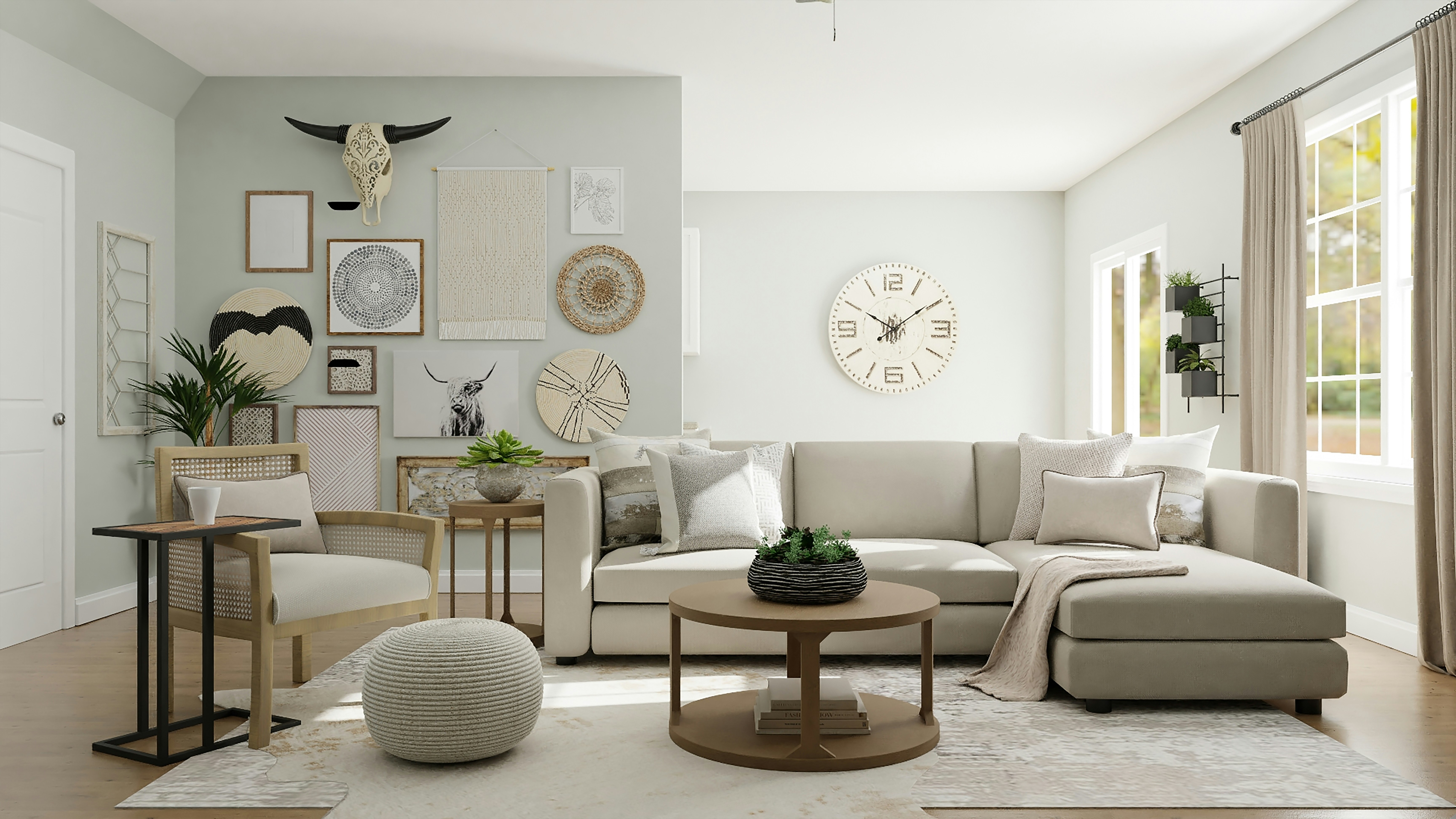
A centered bed with symmetrical nightstands is the single biggest layout win for shared small bedrooms.
Sharing a small bedroom as a couple comes with a specific set of layout puzzles: two people need two sides of the bed, two places to get dressed, and somewhere to put two phones, two books, and two pairs of glasses down at night. When square footage is tight, it's tempting to just squeeze the same big-bedroom furniture into a smaller footprint — but that's exactly what makes a small master suite feel cramped instead of cozy.
This guide walks through the layouts that actually work for two people in a small bedroom, the furniture choices that save space without sacrificing function, and the styling details that make the room feel like a calm, grown-up retreat rather than a storage unit with a bed in it.
The Best Small Bedroom Layouts for Couples
Layout matters more than decor in a small shared bedroom. Get the floor plan right first, then style around it.
01Center the Bed on the Longest Wall
Placing the bed against the longest uninterrupted wall — rather than tucked in a corner — gives both partners equal access and keeps traffic flow along the foot of the bed instead of cutting through one person's side.
Why it works: Equal access on both sides prevents the "one person climbs over the other" problem and makes the room feel intentional rather than improvised.
How to style it: Anchor the headboard visually with a simple wall treatment — a wood slat panel, a large piece of art, or even paint in a slightly deeper tone than the walls around it.
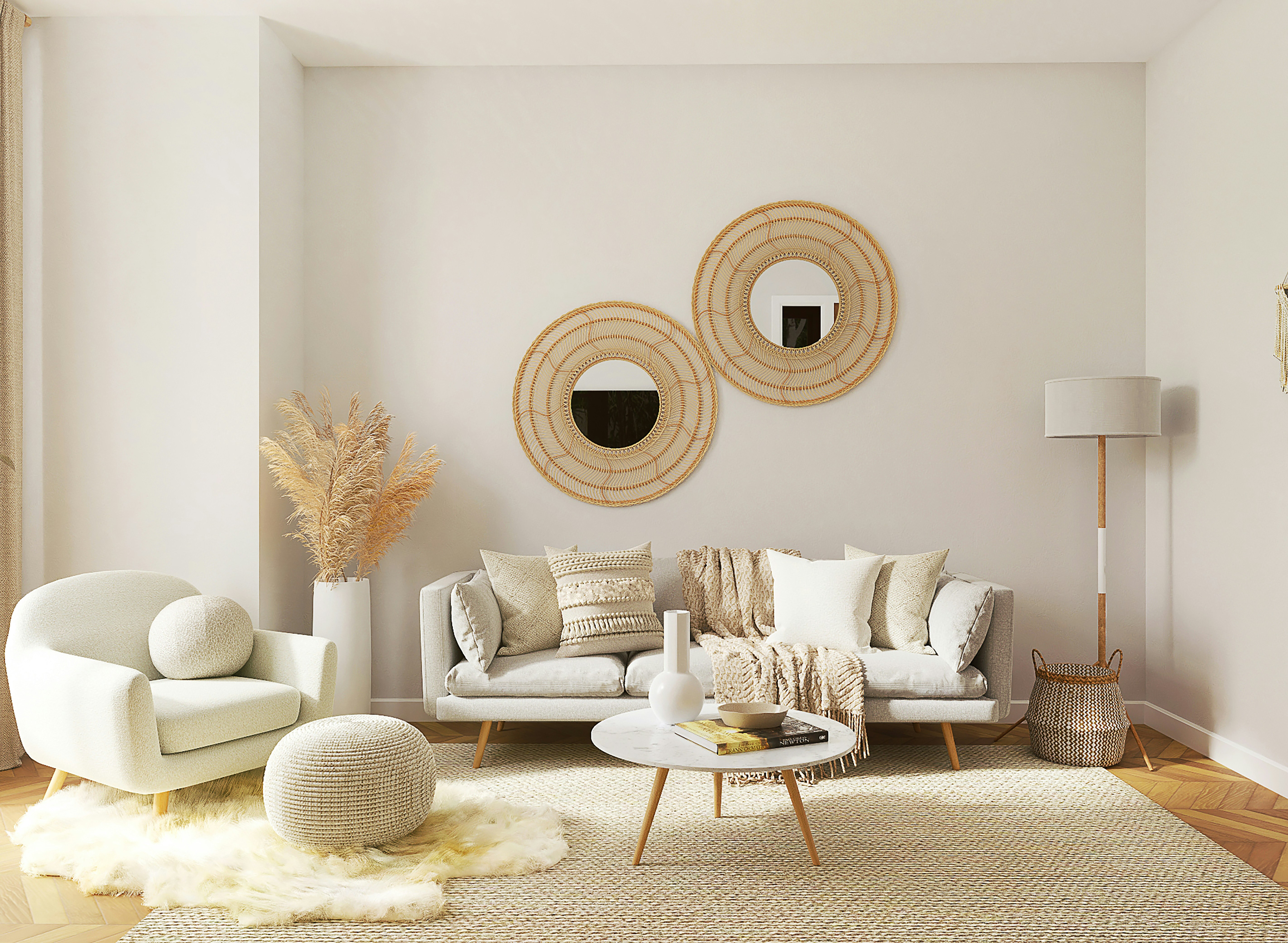
02Choose a Bed Size That Matches the Room, Not the Store Display
A king bed in a room under 120 square feet often leaves almost no walking space. A queen — or even a full-plus-slim-nightstands setup — frequently gives couples nearly the same sleeping comfort with dramatically more usable floor space.
Why it works: Every extra inch of floor space around the bed can go toward storage, a dresser, or simply room to move without stubbing a toe.
How to style it: If downsizing from a king feels like a compromise, invest the size savings into a slightly taller headboard or a plush mattress topper so the bed still feels like the "main event" of the room.
03Use Matching Slim Nightstands — Not Mismatched Furniture
Two narrow, identical nightstands (12–16 inches deep) do more for a couple's small bedroom than one large nightstand and one improvised stack of books.
Why it works: Symmetry reads as "designed on purpose" even in a small space, and it gives each partner equal surface area for a lamp, glasses, and a phone.
How to style it: Add a small lamp, one personal object, and a tiny dish for rings or watches on each side — keep both sides visually balanced, even if the objects differ slightly.
04Split Storage Instead of Sharing One Dresser
Instead of one large shared dresser, two narrower storage pieces — one per person, placed on opposite walls — often fit better around doors and windows and prevent the "whose drawer is whose" clutter battle.
Why it works: Personal storage reduces daily friction for couples and makes better use of awkward wall segments that a single wide dresser wouldn't fit into.
How to style it: Choose two dressers in the same finish (even if different widths) so they read as a set rather than mismatched furniture.
05Float the Bed Away From Corners When Possible
Even a few inches of breathing room on all sides — rather than jamming the bed into a corner — makes a small room feel more like a suite and less like a dorm room.
Why it works: Corner-jammed beds visually shrink a room by cutting off two walls at once. A floated bed lets light and sightlines travel further.
How to style it: If a corner placement is unavoidable, hang art or a mirror on the open adjacent wall to keep that side feeling considered rather than forgotten.
Storage Solutions for a Shared Small Bedroom
Storage is where most small shared bedrooms fall apart — two people generate roughly double the clothing, shoes, and nightstand clutter of a solo bedroom.
Go Vertical Wherever Possible
Tall, narrow storage pieces use floor space more efficiently than wide, short ones. A slim 6-drawer dresser often stores as much as a wide 4-drawer one while taking up half the wall footprint.
Use the Space Under the Bed
A platform bed with built-in drawers, or simple under-bed storage bins, can absorb off-season clothing, extra linens, or shoes — items that would otherwise crowd a closet two people already share.
Add a Bench or Storage Ottoman at the Foot of the Bed
This gives a shared spot to sit while dressing and doubles as hidden storage for extra blankets or out-of-rotation clothing.
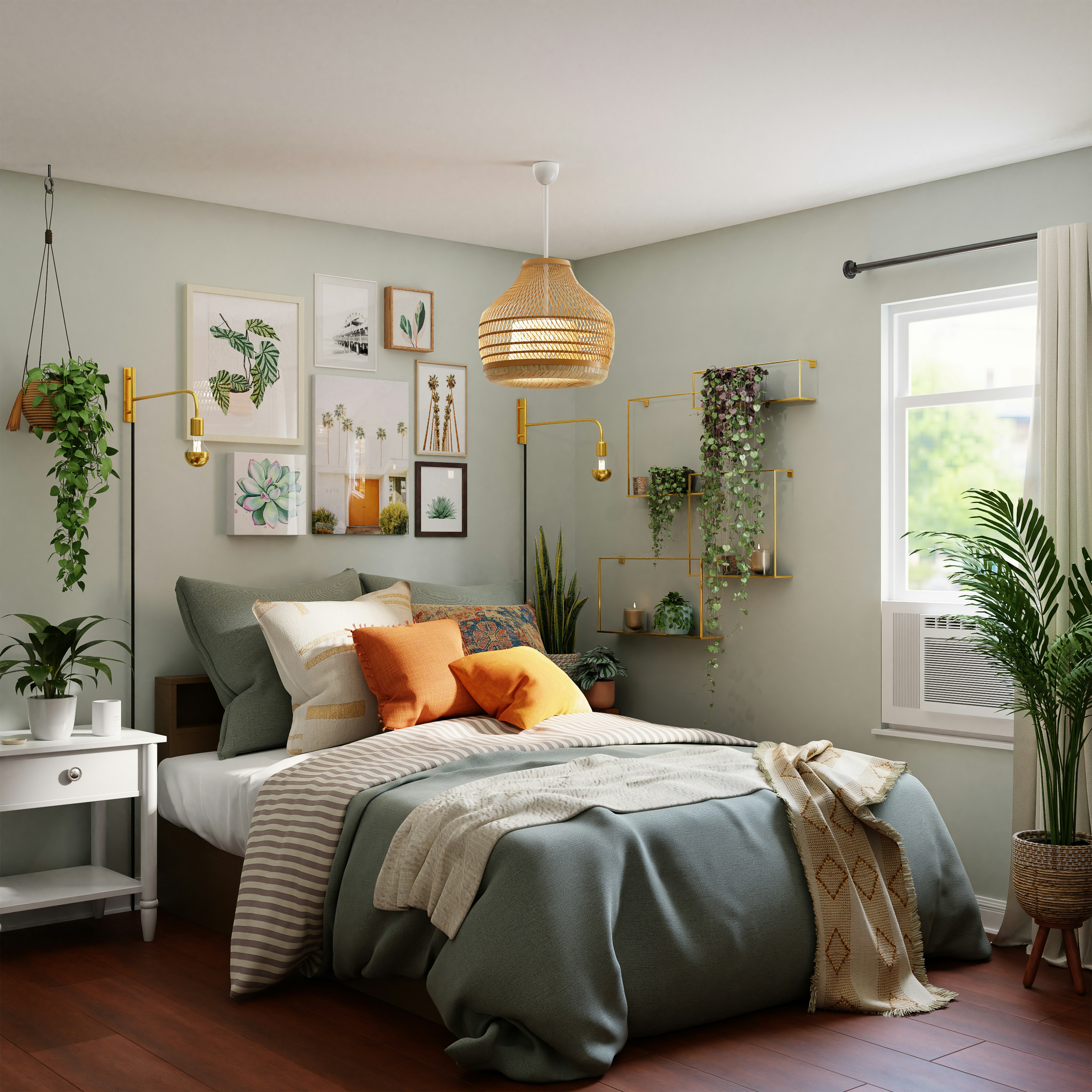
Color & Material Guide
Small shared bedrooms benefit from a calm, cohesive palette — busy color schemes tend to make tight spaces feel more chaotic, especially when two people's belongings are already visually competing for space.
Style Guide: Getting the Look
Bedding: Choose one neutral base (linen white, oatmeal, warm gray) so it's easy for both partners to agree on, then layer in a single shared accent color through a throw or pillows.
Lighting: Two matching bedside lamps — not overhead lighting alone — let one partner read while the other sleeps, which matters more in shared bedrooms than almost any other styling choice.
Rugs: A rug that extends at least 18–24 inches past each side of the bed grounds the layout and softens the transition into walking space.
Mirrors: A single large mirror — ideally opposite a window — makes the room feel larger and gives both people a shared spot to get ready.
Room Adaptations
For Apartments & Rentals
Use removable wall art, tension curtain rods, and freestanding furniture instead of anything requiring drilling or built-ins, so the layout is easy to undo at move-out.
For Very Small Rooms (Under 100 sq ft)
Prioritize the bed and one shared storage solution first; add nightstands last, and consider wall-mounted shelves instead of floor-standing ones if floor space is truly limited.
For Larger Small Bedrooms (120+ sq ft)
There's usually room for a small bench, a reading chair in the corner, or a narrow shared vanity — add one "extra" element rather than several, so the room doesn't tip back into clutter.
Budget-Friendly Version
You don't need to replace every piece of furniture to make a shared small bedroom feel intentional. Focus spending on the three things that affect daily comfort most: the mattress, the lighting, and the bedding — then work with existing furniture for everything else.
Shop your home first: A dresser from another room, repainted, can stand in as a second nightstand.
Rearrange before you buy: Simply centering the bed and squaring up existing furniture often solves 70% of the "cramped" feeling for free.
Prioritize textiles: New bedding and two matching lamp shades change the entire feel of a room for a fraction of the cost of new furniture.
Designer Details
Symmetry: In shared bedrooms specifically, symmetry (matching nightstands, matching lamps) reads as fairness and calm — it's a small design choice that has an outsized emotional effect in a couple's space.
Scale: Furniture that's slightly undersized for the room, rather than oversized, will almost always make a small shared bedroom feel more comfortable to move through.
Layering: One textured throw, one patterned pillow, and one plant is enough — in small rooms, restraint reads as expensive; excess reads as cluttered.
Mistakes to Avoid
1. Buying a bed too large for the room. Measure clearance on both sides before committing to king-size.
2. Only one nightstand. This creates daily friction — both partners need equal storage and surface space.
3. Pushing the bed into a corner without addressing the open side. Leaves the layout feeling unfinished.
4. Overhead lighting only. Makes it hard for one partner to read while the other sleeps.
5. Mismatched, cluttered surfaces. Two people's belongings need a system, or the room will always look messy regardless of furniture.
6. Ignoring the closet. A shared bedroom's storage problem is often really a closet organization problem — solve that first.
Before You Start Checklist
☐ Measure the room and mark the longest uninterrupted wall
☐ Confirm bed size fits with 24+ inches of clearance per side
☐ Decide on one shared accent color
☐ Plan storage per person, not per room
☐ Check that both sides of the bed have a light source
☐ Set a realistic budget and prioritize bedding + lighting first
| Room Size | Best Bed Size | Storage Priority |
|---|---|---|
| Under 100 sq ft | Full or Queen (slim frame) | Under-bed + wall-mounted |
| 100–130 sq ft | Queen | Two slim dressers |
| 130+ sq ft | Queen or King | Dressers + bench/chair |
Frequently Asked Questions
What is the best bed size for a small bedroom shared by a couple?
Queen is usually the sweet spot — it gives couples nearly king-level sleeping comfort while leaving meaningfully more floor space for movement and storage in rooms under 130 square feet.
How do I make a small shared bedroom feel bigger?
Center the bed on the longest wall, keep the color palette calm and cohesive, use a large mirror opposite a window, and avoid oversized furniture that competes with the bed for visual attention.
Do couples need two nightstands in a small bedroom?
Yes — even narrow, wall-mounted versions are worth prioritizing, since separate surfaces reduce daily friction and make the layout feel balanced.
How can I decorate a shared small bedroom on a budget?
Rearrange existing furniture around the bed first, then invest any budget in new bedding, two matching lamps, and a rug — these have the biggest visual impact for the lowest cost.
What's the best layout for a small master suite?
Centered bed on the longest wall, matching nightstands on both sides, split storage on separate walls, and one focal point (mirror or art) opposite the bed or window.
Is a king bed ever a good idea in a small bedroom?
Only if there's still at least 24 inches of clearance on both sides after placement — otherwise a queen with a plush topper typically serves couples better in tight rooms.
How do I keep a shared bedroom from feeling cluttered?
Give each partner their own defined storage zone, limit shared surfaces to one or two personal objects each, and solve closet organization before adding more furniture to the room itself.
Save This Small Bedroom Layout
Pin this guide so it's easy to find next time you're planning your shared bedroom layout.
Final Takeaway: The biggest shift for a small shared bedroom isn't more furniture — it's a smarter layout. Center the bed, give both partners equal storage and lighting, and keep the palette calm. Start today by simply measuring your longest wall and checking how much clearance your current bed placement actually leaves on each side.