
Neutral Living Room Ideas With Warm Wood Tones
A calm, layered palette that feels collected, warm, and completely livable.
If your living room feels flat, cold, or a little too "showroom," warm wood tones are the fastest way to bring it back to life. This guide walks through 24 practical, designer-inspired ideas for building a neutral living room that leans warm instead of stark — using honey oak, walnut, rattan, and soft ivory to create a space that feels grounded, inviting, and timeless. You'll find furniture direction, styling formulas, budget-friendly swaps, and small-space adaptations you can start using today.
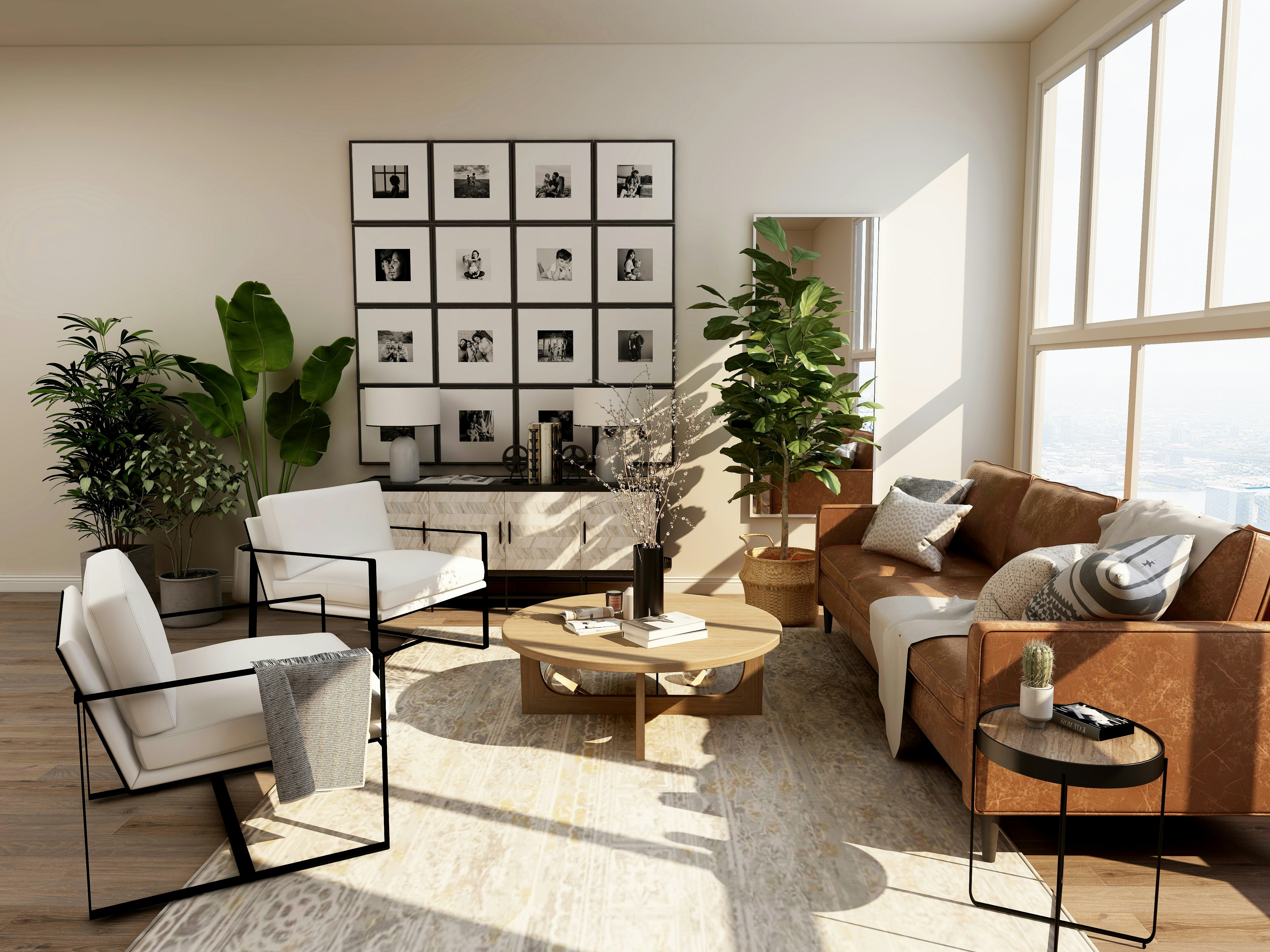
Quick Design Snapshot
| Room | Living Room |
| Style | Warm Neutral / Modern Organic |
| Color Direction | Ivory, warm greige, honey oak, walnut |
| Best For | Cozy family rooms, apartments, transitional homes |
| Budget Level | Adaptable — budget to designer-level |
| Difficulty | Easy to moderate |
| Main Materials | Wood, linen, boucle, rattan, wool |
Why Warm Wood Tones Work in a Neutral Living Room
Neutral rooms can easily tip into feeling cold or unfinished if every surface is white, gray, or black. Warm wood tones solve this instantly. Wood brings natural variation, texture, and a sense of history into the space, which keeps a neutral palette from feeling sterile. It also acts as a bridge tone — warm enough to soften crisp whites, but grounded enough to anchor busier textiles like linen, boucle, or wool. The result is a living room that photographs beautifully but, more importantly, feels comfortable to actually live in.
24 Neutral Living Room Ideas With Warm Wood Tones
Anchor the Room With a Solid Wood Coffee Table
A substantial wood coffee table in oak, walnut, or acacia becomes the visual anchor of a neutral living room. Choose a piece with visible grain rather than a painted or laminate finish so the warmth actually reads.
Why It WorksIt grounds lighter furniture like a linen sofa and gives the eye a natural resting point in the center of the room.
How To Style ItPair with a woven tray, a stack of neutral-toned books, and one ceramic vessel. Leave open space — don't crowd the surface.
Budget AlternativeLook for solid wood secondhand pieces and refinish with natural oil rather than buying new.
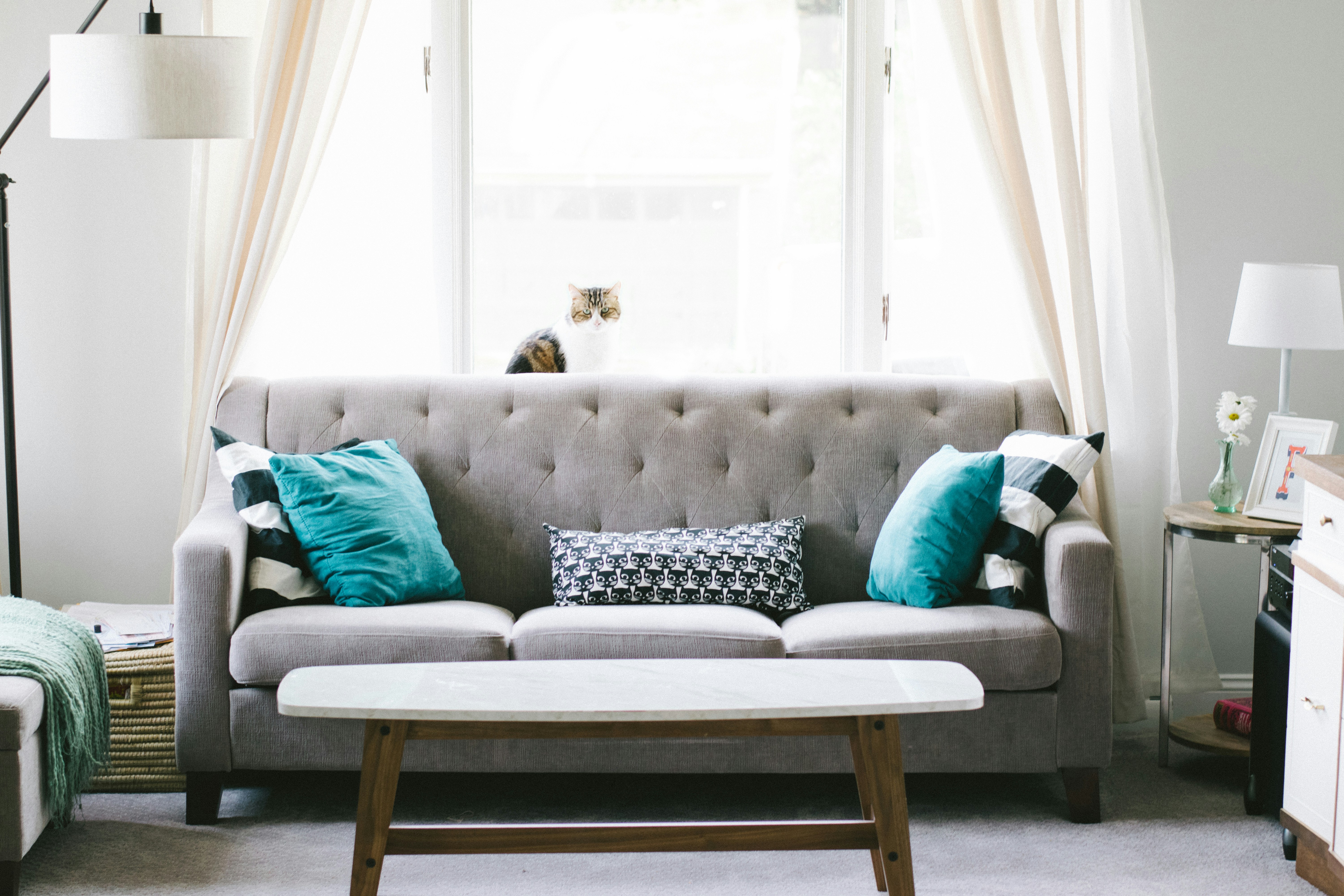
Layer a Jute or Wool Rug Over a Neutral Base
A natural-fiber rug in jute, sisal, or wool adds texture underfoot and reinforces the organic, warm feel of the room without introducing new color.
Why It WorksTexture does the work that color usually does — it keeps a neutral room visually interesting.
How To Style ItLayer a smaller wool or vintage-style rug on top of a larger jute rug for depth and softness underfoot.
Budget AlternativeA flatweave jute rug is significantly cheaper than a hand-knotted wool option and still delivers the texture.
Choose a Wood-Framed Sofa or Accent Chair
Exposed wood legs or a wood-framed accent chair introduce warmth at eye level, not just on the floor.
Why It WorksWood at multiple heights (floor, table, seating) creates rhythm throughout the room instead of one isolated wood moment.
How To Style ItPair a wood-framed chair with a boucle or linen cushion for softness against the structure of the wood.
Budget AlternativeAdd a wood-based accent stool instead of a full chair if budget is tight.
Add Rattan or Cane Accents
Rattan chairs, cane cabinet fronts, or woven pendant lighting bring in a lighter, more textural form of warm wood tone.
Why It WorksRattan reads as warm and organic without the visual weight of solid wood, which is useful in smaller rooms.
How To Style ItUse one rattan piece as a feature — a lounge chair or pendant light — rather than repeating it everywhere.
Budget AlternativeA single rattan mirror or basket delivers the same texture at a fraction of the cost of furniture.
Warm Up Walls With a Wood Slat Accent Wall
A slatted wood accent wall behind the sofa or TV adds architectural warmth without needing to paint the whole room a bold color.
Why It WorksIt creates a natural focal point and adds texture to what is often the largest flat surface in the room.
How To Style ItKeep the rest of the walls plain and let this be the one statement moment.
Budget AlternativePeel-and-stick slat wall panels achieve a similar look for renters at a much lower cost.
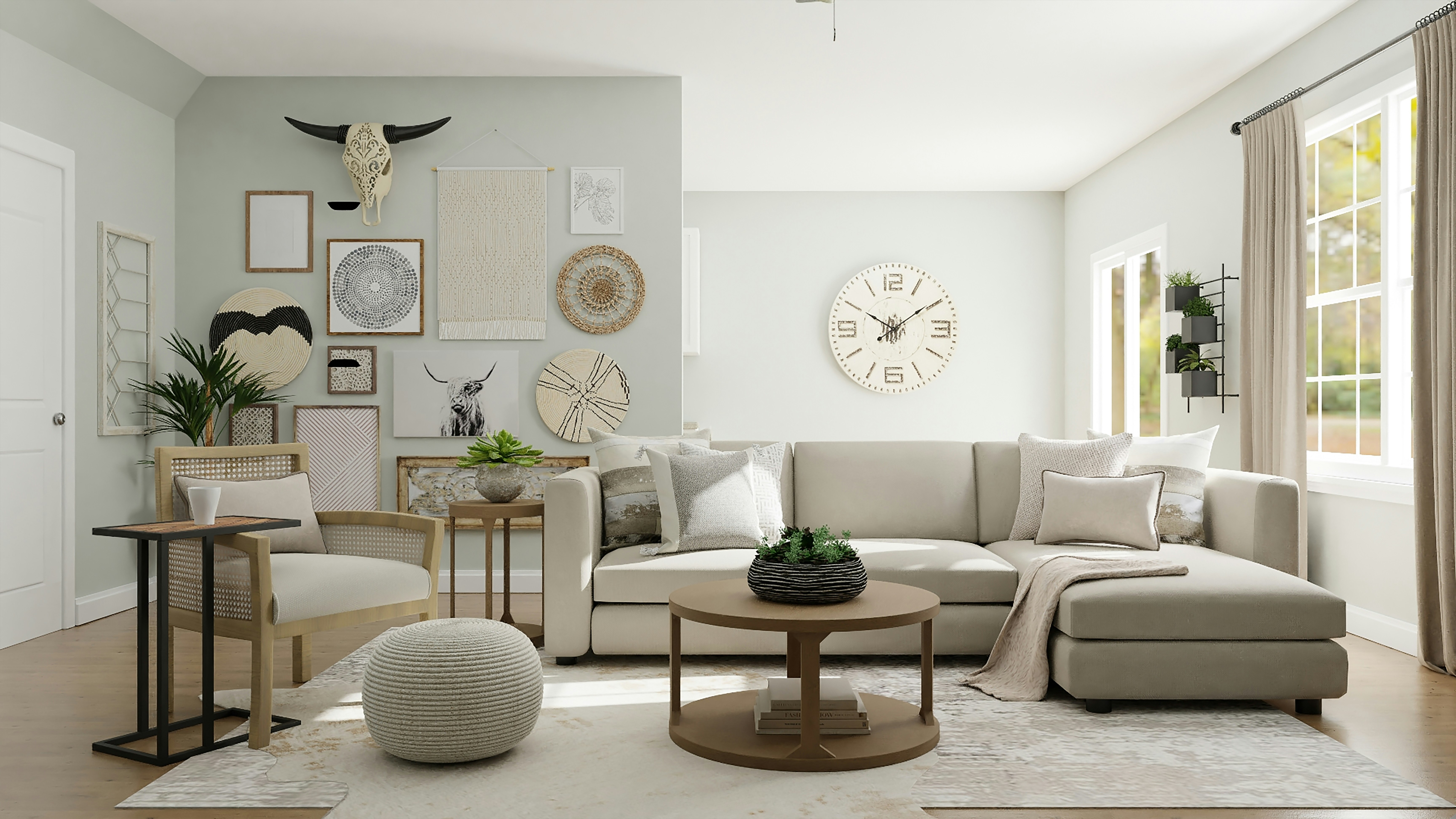
Choose an Ivory or Oatmeal Linen Sofa
A linen sofa in ivory or oatmeal creates the soft, neutral base that lets wood tones stand out.
Why It WorksLinen's natural slubby texture already feels organic, so it pairs effortlessly with wood.
How To Style ItAdd two or three cushions in slightly different warm neutrals — never an exact color match.
Budget AlternativeA washable linen-blend slipcover sofa offers the same look at a lower price point.
Introduce a Wood-and-Glass Media Console
A media console with warm wood detailing keeps the TV area from feeling like a technology-first zone.
Why It WorksIt ties the entertainment wall into the rest of the room's material story.
How To Style ItStyle the top with one plant, one stack of books, and a small ceramic piece — avoid clutter.
Budget AlternativeA laminate console with a genuine wood-veneer front looks convincing at a lower price.
Add Wood Bowl or Tray Vignettes
Small wood bowls, trays, and boards on coffee tables or shelves add warmth in low-commitment, low-cost ways.
Why It WorksThey let you introduce wood tone in areas where full furniture pieces aren't practical.
How To Style ItGroup in odd numbers with varying heights — one bowl, one candle, one small stack of books.
Budget AlternativeThrifted wood bowls are inexpensive and add authentic texture and wear.
Use a Wood Bookshelf or Ladder Shelf
An open wood shelving unit or ladder shelf adds both storage and visual warmth to an otherwise neutral wall.
Why It WorksOpen shelving shows off wood grain more than closed cabinetry, maximizing the material's impact.
How To Style ItFill roughly 60–70% of the shelf space — leave breathing room so it doesn't feel cluttered.
Budget AlternativeA simple ladder shelf is one of the most affordable ways to add a wood furniture moment.
Warm Lighting With Wood or Woven Pendants
Lighting fixtures with wood, rattan, or woven shades cast a warmer glow than metal or glass alone.
Why It WorksLight color temperature matters as much as material — warm-toned shades soften the whole room after dark.
How To Style ItCombine one overhead woven pendant with a wood-based floor or table lamp for layered lighting.
Budget AlternativeSwap only the lampshade to a woven or linen option instead of replacing the whole fixture.
Mix Wood Tones Intentionally
Rather than matching every wood piece exactly, mix two or three complementary tones — light oak, mid walnut, and reclaimed wood.
Why It WorksMatched wood can look like a furniture set; mixed wood looks collected over time, which reads as more premium.
How To Style ItKeep undertones consistent — pair warm woods with warm woods, avoiding cool gray-toned wood in the same grouping.
Budget AlternativeThis approach actually saves money since pieces don't need to match or come from the same collection.
Add a Wood-Framed Mirror
A large wood-framed mirror bounces light around the room while reinforcing the warm material palette.
Why It WorksMirrors visually expand the space and multiply the warmth already in the room.
How To Style ItLean a large mirror against the wall for a relaxed, editorial look, or hang it centered above a console.
Budget AlternativeLook for a wood-frame mirror at a home goods discount store rather than a specialty retailer.
Bring in Wood Through Window Treatments
Wood or bamboo blinds add texture at the window without introducing new color, keeping the neutral palette intact.
Why It WorksWindows are a large visual area — texture here has an outsized impact on the room's warmth.
How To Style ItPair wood blinds with simple linen curtain panels for softness alongside the structure.
Budget AlternativeFaux-wood blinds offer a similar look and are more affordable and durable than real wood.
Add Live-Edge or Organic-Shaped Wood Pieces
A live-edge side table or organically shaped wood stool introduces a more artisanal, high-end feel.
Why It WorksThe irregular edge highlights the natural material in a way that feels intentional and elevated.
How To Style ItUse as an accent piece near a chair rather than the main coffee table, so it stands out.
Budget AlternativeA small live-edge stool is far more affordable than a full-size table version.
Use Woven Wood Baskets for Storage
Wood-toned woven baskets double as storage for blankets or toys while adding texture at floor level.
Why It WorksThey solve a practical clutter problem while reinforcing the room's material palette.
How To Style ItPlace one large basket beside the sofa for throws, and a smaller one near the media console.
Budget AlternativeSeagrass baskets are typically cheaper than rattan and offer a similar warm texture.
Add Wood Accents to Curtain Rods and Hardware
Wood curtain rods, finials, and even wood-toned door hardware are small details that add up.
Why It WorksHardware is often overlooked, but warm wood details here tie the whole room together.
How To Style ItMatch rod tone loosely to your largest wood furniture piece.
Budget AlternativeWood-look curtain rod adapters can update existing metal rods affordably.
Layer Textiles in Warm Neutral Tones
Boucle, chunky knit, and wool throws in warm ivory or camel add coziness that complements wood surfaces.
Why It WorksSoft textures balance the hard surfaces of wood furniture, keeping the room from feeling too rigid.
How To Style ItDrape one throw over the arm of a chair or sofa back, folded rather than perfectly flat.
Budget AlternativeA single well-chosen throw pillow set can update the whole sofa without buying new furniture.
Add Wood Picture Frames or Gallery Wall Elements
A gallery wall with wood-toned frames adds personality while staying within the neutral, warm palette.
Why It WorksArt brings personal warmth, and wood frames keep it cohesive with the rest of the room's materials.
How To Style ItVary frame sizes but keep tones within the same warm family for a curated look.
Budget AlternativeRepaint or re-stain existing frames rather than buying new ones.
Choose Wood Dining or Side Chairs Near the Living Area
If your living room connects to a dining or open-plan space, wood chairs help unify both zones.
Why It WorksConsistent material choices across open-plan spaces make the whole floor feel intentional, not disjointed.
How To Style ItUse the same or a complementary wood tone as your coffee table or console.
Budget AlternativeRefinish existing chairs rather than replacing the full set.
Add Greenery in Wood or Terracotta Planters
Plants in wood or unglazed terracotta pots reinforce the organic, earthy feel of the room.
Why It WorksLiving elements add color and life without breaking the neutral palette.
How To Style ItUse one large floor plant and one or two smaller tabletop plants for varied heights.
Budget AlternativeFaux plants in quality wood planters are a low-maintenance, budget-friendly alternative.
Use a Wood Accent Ceiling Beam or Detail
Exposed or added wood ceiling beams bring warmth to a space that's often left untouched.
Why It WorksIt's an unexpected place to add material interest, drawing the eye upward and making the room feel more finished.
How To Style ItKeep ceiling color simple and let the beam do the work as a singular architectural statement.
Budget AlternativeLightweight faux beams achieve the look without structural renovation.
Add a Wood Bar Cart or Drinks Trolley
A small wood-and-metal bar cart adds a functional styling moment to a corner of the living room.
Why It WorksIt gives you a defined spot for styling glassware and decor without cluttering main surfaces.
How To Style ItKeep it simple — a few glasses, one bottle, and a small plant is enough.
Budget AlternativeA vintage wood side table can serve the same purpose without buying a dedicated cart.
Choose Wood Tone Flooring or Area Rugs That Complement It
If you have wood or wood-look flooring, choose furniture wood tones that complement rather than exactly match it.
Why It WorksSlight contrast between floor and furniture wood tones creates depth instead of a flat, one-note look.
How To Style ItBreak up floor-to-furniture wood transitions with a rug in a neutral, non-wood tone.
Budget AlternativeA large area rug is a lower-cost way to visually reset flooring you can't change, especially in a rental.
Finish With a Wood-Toned Clock or Sculptural Object
A single sculptural wood object — a clock, abstract carving, or decorative bowl — acts as a finishing detail.
Why It WorksFinishing touches like this are what make a room feel complete rather than "almost done."
How To Style ItPlace on a shelf or mantel where it has room to be seen, not crowded by other objects.
Budget AlternativeThrifted wood sculptural pieces often have more character than new mass-produced ones.
Color & Material Palette Guide
Style Guide: Bringing It All Together
Furniture: Choose one dominant wood tone for large pieces (coffee table, console) and let smaller accents introduce variation.
Textiles: Linen, boucle, and wool in ivory, oatmeal, and camel keep the palette soft and warm.
Lighting: Use warm-toned bulbs and at least two light sources beyond the overhead fixture.
Metals: Matte black or aged brass both pair well with warm wood — avoid cool chrome, which can clash.
Plants: One large floor plant and a few smaller tabletop plants add life and organic contrast.
Budget-Friendly Ways to Get This Look
- Shop your home first — a wood side table from another room can become your new coffee table.
- Refinish or re-stain existing wood furniture instead of replacing it.
- Add wood-toned accessories (bowls, trays, frames) before investing in furniture.
- Use a rug to visually reset a floor tone you can't change, especially in a rental.
- Prioritize one or two high-impact pieces (coffee table, lighting) over many small purchases.
- Thrift or buy secondhand wood furniture — natural wear often adds character rather than detracting from it.
Small-Space & Rental-Friendly Adaptations
Small-Space Version: Choose leggy, lightweight wood furniture instead of bulky solid pieces so light can pass underneath and the room feels more open.
Rental-Friendly Version: Rely on rugs, curtains, lighting, and accessories for warmth rather than permanent changes like flooring or built-ins.
Apartment Version: A single wood accent wall panel or a well-placed rattan pendant can transform a rented living room without violating lease terms.
| Budget Level | Suggested Upgrade |
|---|---|
| Low | Wood bowls, trays, and a new throw pillow set |
| Medium | Jute rug, woven pendant light, wood-framed mirror |
| High | Solid wood coffee table, linen sofa, wood slat accent wall |
Designer Details Worth Knowing
Layering: Combine multiple textures — wood, linen, wool, rattan — rather than relying on one material alone.
Scale: Choose furniture proportional to your room; an oversized coffee table can overwhelm a small living room.
Repetition: Repeat your wood tone at least three times around the room (floor, table, frame, or shelf) to make it feel intentional.
Contrast: Balance warm wood with at least one cooler or darker element, like matte black lighting, to avoid a flat look.
Common Mistakes to Avoid
- Matching every wood tone exactly, which can look like a matched furniture set rather than a curated room.
- Using only cool-white lighting, which fights against warm wood tones.
- Choosing furniture that's too large for the room, overwhelming the wood details.
- Skipping texture layers and relying on wood alone to carry the whole room.
- Ignoring undertones — mixing warm wood with cool-gray wood can look mismatched.
- Overcrowding surfaces so the natural grain and texture of the wood gets lost.
Before You Start Checklist
- Measure your space and main furniture pieces
- Choose one dominant wood tone as your reference point
- Check how natural light affects your wood undertones during the day
- Decide on a focal point (coffee table, accent wall, or lighting)
- Set a realistic budget before shopping
- Identify any existing pieces worth keeping or refinishing
Save This Home Idea
Pin this guide so you can come back to it next time you're planning a living room refresh.
Frequently Asked Questions
How do I decorate a neutral living room on a budget?
Start with accessories — wood bowls, a new throw, and a rug — before investing in furniture. Refinishing existing pieces is often more affordable than buying new ones.
What wood tones work best together in one room?
Woods with the same undertone (warm-to-warm, or cool-to-cool) blend well even if the exact shade differs. Avoid mixing strongly warm and strongly cool wood in the same view.
How do I make a small living room feel larger with this style?
Choose leggy furniture that lets light pass underneath, use a large mirror to bounce light, and keep the color palette consistent from floor to ceiling.
How can I make this look more expensive?
Focus on one or two high-quality wood pieces rather than many low-cost items, and prioritize natural materials like linen and wool over synthetic textiles.
What should I avoid when decorating with neutrals?
Avoid an all-cool palette, which can feel flat, and avoid too much matching, which can feel showroom-like instead of lived-in.
How can I make this rental-friendly?
Rely on rugs, lighting, curtains, and peel-and-stick wood panels rather than permanent changes to floors or walls.
What colors pair well with warm wood tones?
Ivory, warm greige, sage green, and terracotta all pair naturally with warm wood without competing with it.
Final Takeaway
A neutral living room doesn't have to feel cold or unfinished — warm wood tones are what turn a neutral palette into a warm, layered, livable space. The core principle to remember: repeat your wood tone at least a few times around the room, layer in natural textures, and let one or two statement pieces do the heavy lifting. Start today with one simple change — swap a cool-white bulb for a warm-toned one, or add a single wood bowl to your coffee table — and build from there.